

Brief description of the hardness of advanced ceramics
Advanced ceramics are known for their excellent mechanical properties, with hardness being one of their most notable and valuable attributes. In high-performance applications in aerospace, electronics, medical and industrial fields, hardness is critical for wear resistance, surface durability and dimensional stability. This paper explores the concept of ceramic hardness, compares it to metals and plastics, and provides detailed hardness data for the major ceramic materials.
jump to
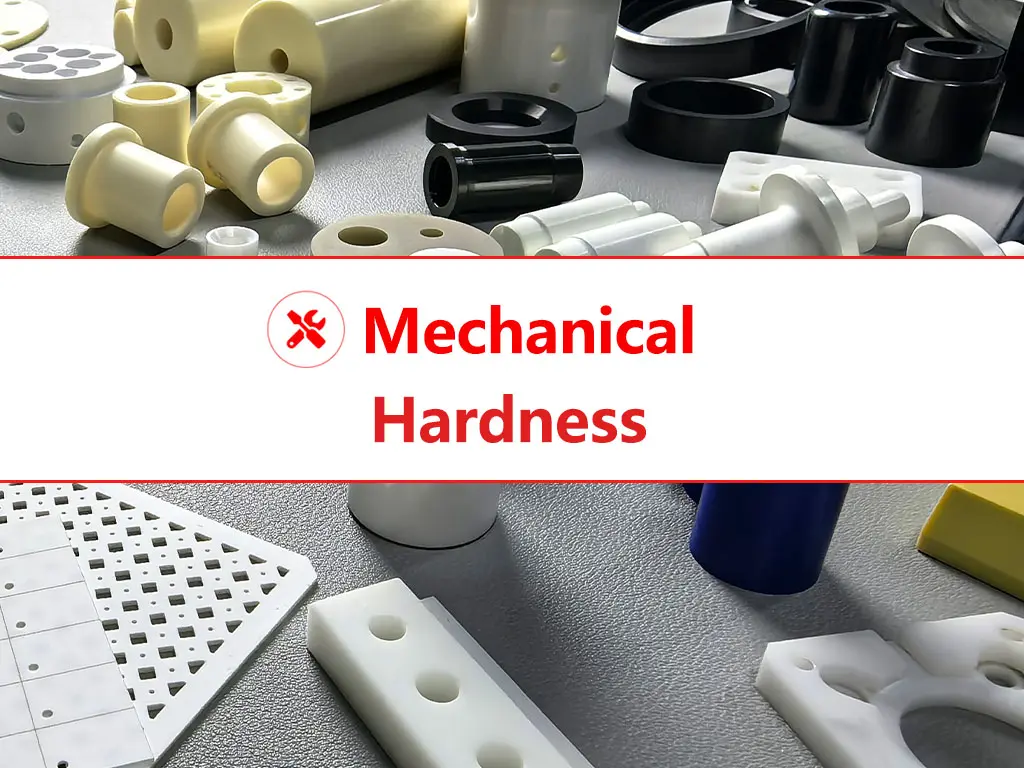
What is hardness?
Hardness is the ability of a material to resist localized plastic deformation, such as indentation, scratching or abrasion. For ceramics, the Vickers Hardness (HV) test is commonly used. In this test, a diamond pyramid-shaped indenter is pressed into the surface of the material under a standard load. The smaller the indentation, the harder the material. Due to their strong ionic/covalent bonding and close-packed crystal structure, advanced ceramics are much harder than most metals and polymers.
Tip: High hardness does not mean high toughness, for example, silicon carbide, aluminum oxide is very hard, but more brittle than metal, easy to break.
Why hardness is so important in advanced ceramic applications
Hardness data for major advanced ceramics
| Ceramic materials | Vickers hardness (HV) | Mohs hardness | a type of literature consisting mainly of short sketches |
|---|---|---|---|
| Silicon Carbide (SiC) | 2,500 - 3,100 | 9.5 | Excellent abrasion resistance |
| Aluminum oxide (Al₂O₃) | 1,800 - 2,200 | 9 | Affordable and highly durable |
| Silicon Nitride (Si₃N₄) | 1,400 - 1,800 | 8.5 - 9 | Tough and thermally stable |
| ZTA Ceramics | 1,500 - 1,800 | - 9 | Combination of hardness and toughness |
| Zirconium oxide (ZrO₂) | 1,200 - 1,400 | 8 - 8.5 | High toughness, medium hardness |
| Beryllium oxide (BeO) | 1,200 - 1,400 | ~9 | High thermal conductivity |
| Aluminum Nitride (AlN) | 1,100 - 1,300 | ~8.5 | thermal conductivity |
| Glass ceramics can be processed | 450 - 600 | ~6 | easy processing |
| Boron nitride (h-BN) | 25 - 40 | 2 | Very soft, lubricating properties |
*Data is for reference only.
Need help choosing the right ceramic?
Choosing the right ceramic material is critical to ensuring long-term reliability and optimal performance. Whether you need zirconia, silicon nitride, or alumina-based ceramics, our materials provide industry-leading strength, durability, and precision.
Our technical team is here to help - contact us today for expert customized advice for your specific needs.
Hardness comparison table: ceramics, metals and plastics
The bar chart below shows the Vickers hardness (HV) of various engineering materials - from super hard ceramics to common industrial plastics, in order from hard to soft.
*Data is for reference only.




 简体中文
简体中文  English
  Tiếng Việt
  Bahasa Melayu
  ไทย
ไทย  العربية